

01 / Landing page
Get in front of the first buyer.
For founders who need one credible page before a pilot meeting, a conference or a fundraise.
- One audience, one clear message
- Claims you can prove
- Built in Framer
- A form with no health details
Design
Build
Not sure where to start? Start a project
Latest articles
Resources
 Latest articleB2B website design best practices, each tied to the buyer who needs it
Recent cases
Explore
 Case studyiGaming Branding & Web Design: Crypto Casino
Clear to clinicians. Ready for procurement.
Mara designs and builds websites for healthtech companies: clinical AI, digital health apps and care software sold to clinicians, patients and hospital buyers. A typical site takes 3–6 weeks, ships in Framer, Webflow or code, is checked against WCAG 2.1 AA, and keeps patient data out of your marketing stack.

| Who it’s for | Healthtech companies at pilot, growth or redesign stage |
|---|---|
| Timeline | 3–6 weeks for a marketing site, previews every 24–48 hours |
| Platforms | Framer, Webflow or Next.js |
| Accessibility | Designed and checked against WCAG 2.1 AA |
| Price | Fixed price after a free 30-minute call, or a monthly plan. Start with a paid sample if you like. |
| Healthcare clients | Delphyr (clinical AI), Joji Health (digital health), Boom (student mental health), ClinicSaver (clinic booking), Moru (clinic operations), AliveDx, and projects under NDA |
 — Healthcare AI — €1.75M raised — Backed by Hugging Face & DEGIRO founders — AI that turns consultations into clinical notes.
 — Health AI — 80,000+ patient portals connected — MyChart & Epic — An AI health companion that keeps care on track between visits.
 — Diagnostics — ~400 people across the UK & Switzerland — Ex-Nasdaq — Multiplex diagnostics for autoimmune and allergy testing.
Search “healthcare website design” or “medical website design” and most results are about clinics and private practices: appointment booking, insurance lists, local SEO. That’s real work, and medical-practice agencies are good at it.
Healthtech website design is a different job. A clinician has to trust your software with patient data, and a hospital has to open a procurement process that can take months. Meanwhile an investor is checking whether the story holds. The same website serves all three.
| Clinic or practice website | Healthtech company website | |
|---|---|---|
| Main visitor | Patients nearby | Clinicians, hospital buyers, patients, investors |
| Main action | Book an appointment | Request a demo, start a pilot, sign up |
| Proof they look for | Doctor bios, reviews, insurance accepted | Clinical evidence, security, integrations, named customers |
| Compliance focus | Patient forms, ADA access | Tracking and pixels, data residency, WCAG 2.1 AA, claims you can prove |
| Typical sale | Same day | Weeks to months, several decision-makers |
Running a clinic? A practice-focused agency will probably serve you better than we would. Building the software or service that clinics, patients or health systems buy? Read on.
Most healthtech homepages talk to one reader and lose the other three. Before we design anything, we map who visits, what they need to see in the first ten seconds, and which page answers them.
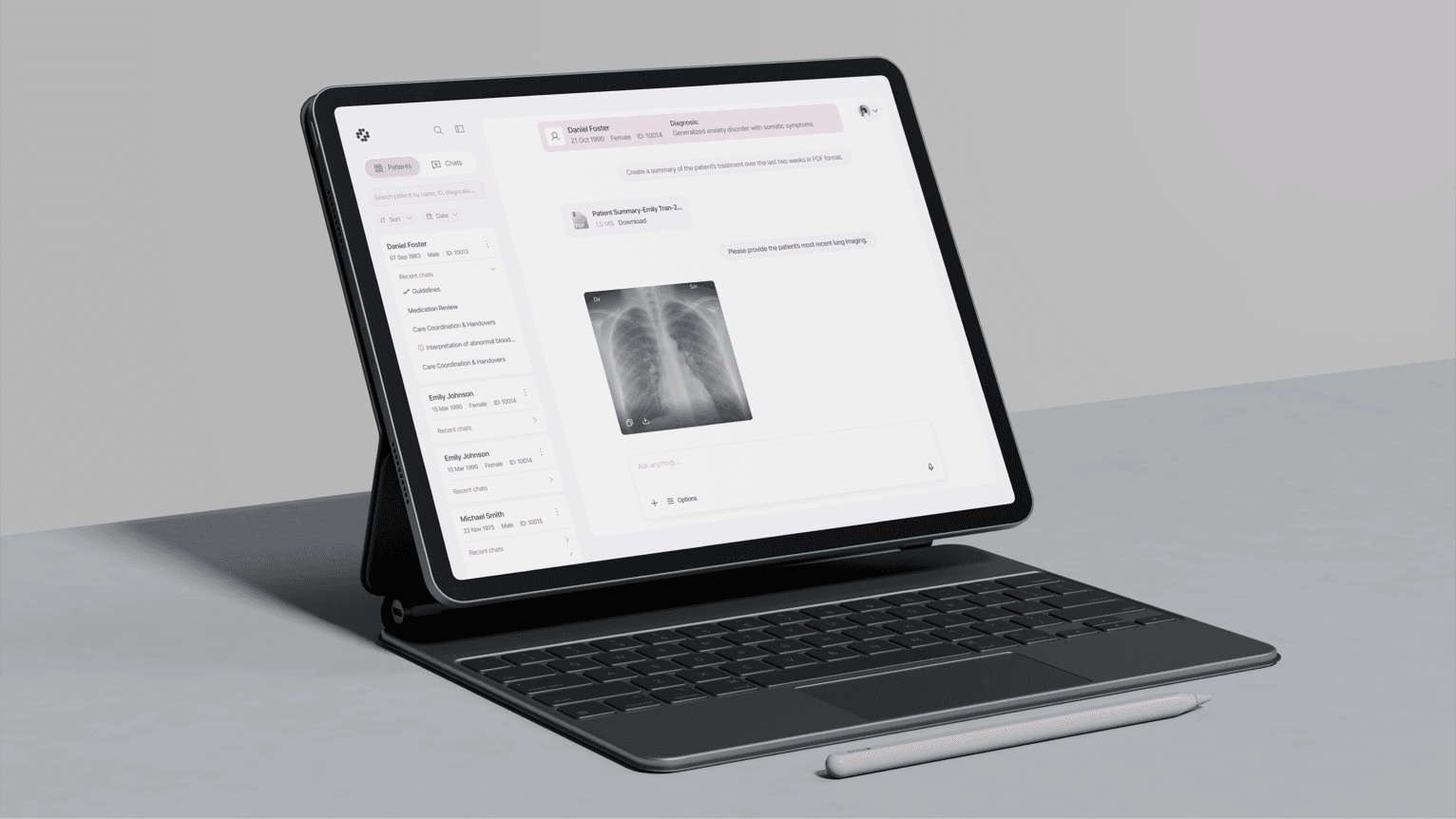
Clinicians want to know if the product fits a working day. Show the workflow. Delphyr, an AI assistant for doctors that we designed, is explained through the questions physicians ask and how fast the answer comes back, inside the systems they already use.
This person works through a checklist: security, integrations, where data lives, references, pricing model. Give them one page they can forward to IT and compliance without booking a sales call.
Patients want reassurance and a clear next step, often on a phone. Write in plain language and skip the medical jargon in the hero. On ClinicSaver, a clinic booking app in the UAE, we put starting prices on every clinic card before the booking form. Seeing the price early answers a patient’s first question.
Investors look at the deck, the site and the product side by side. Delphyr’s three share one design system. Delphyr raised €1.75M in March 2026, from investors including the founders of Hugging Face and DEGIRO.
Product design, research with healthcare professionals, a Framer marketing site, onboarding motion, decks and conference materials, all on one design system. The site explains a complex medical AI to hospitals, primary care and mental health clinics, and brings in demo requests.
Read the case study: Delphyr“They ask the right questions, challenge decisions, and help us build things that actually make sense.”

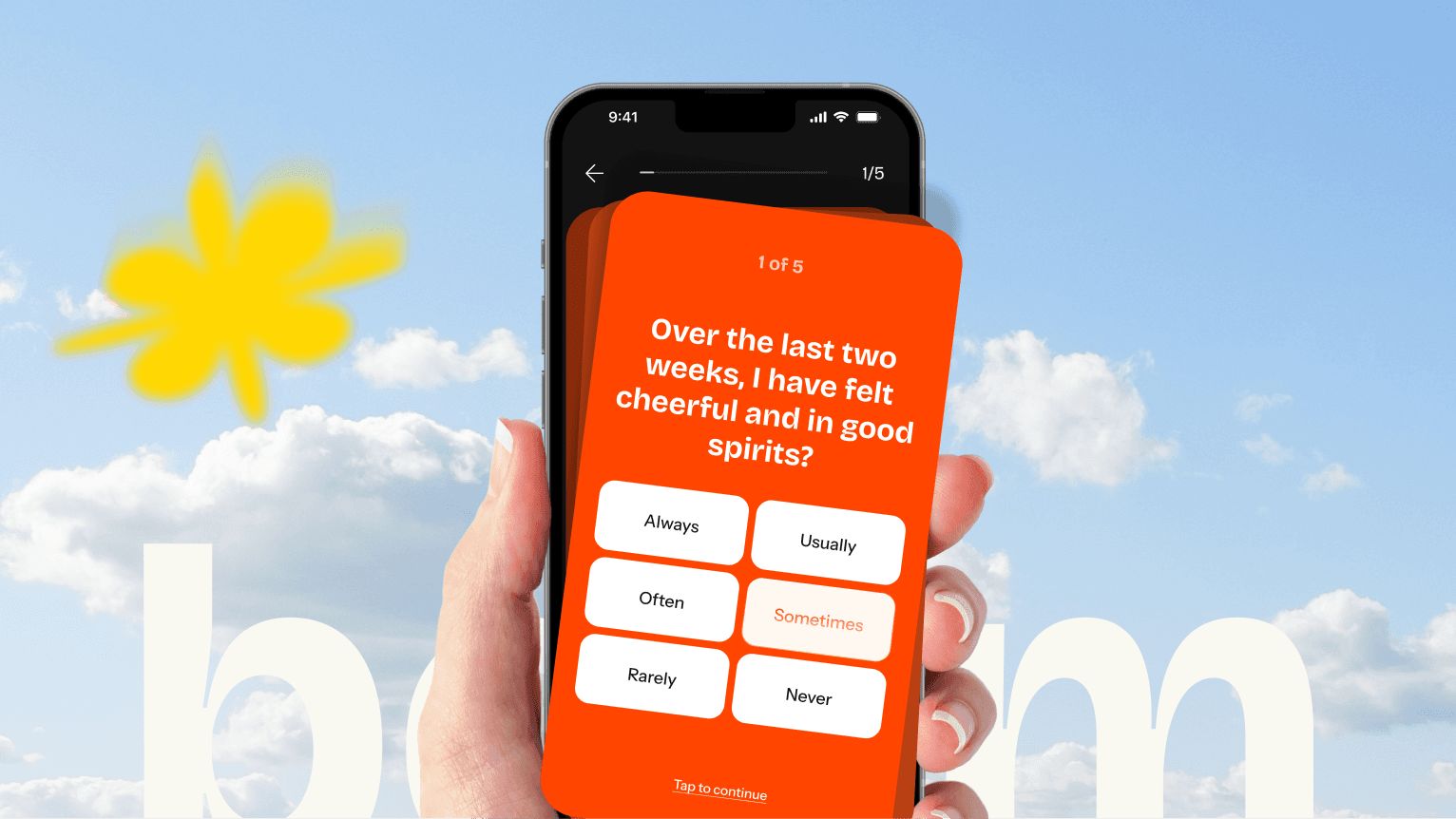
A wellness app that took part in Y Combinator, sold to students as a subscription and to universities as seats. We designed the student app, a campus dashboard that shows only aggregate trends, the brand, and the website and decks for both sales motions.
Read the case study: BoomApp design, brand, website design and development, motion and marketing assets for a digital health company. Full case study coming soon.
Brand, website, mobile app and design system for a UAE app that books discounted private clinic appointments. The website explains the service to patients and clinics and sends both to the app, now live on iOS and Android.
Product design for a clinic ERP and CRM that puts scheduling, patient chat, billing and dashboards in one place, with separate views for doctors, nurses and front-desk staff.
AliveDx is a healthcare client too, and more of our work is under NDA. For patient apps and clinician tools, see our healthcare UX and product design page. Building the app itself? See healthcare app design.
“We pitch a hospital next month. Right now we have a deck and a placeholder page.”
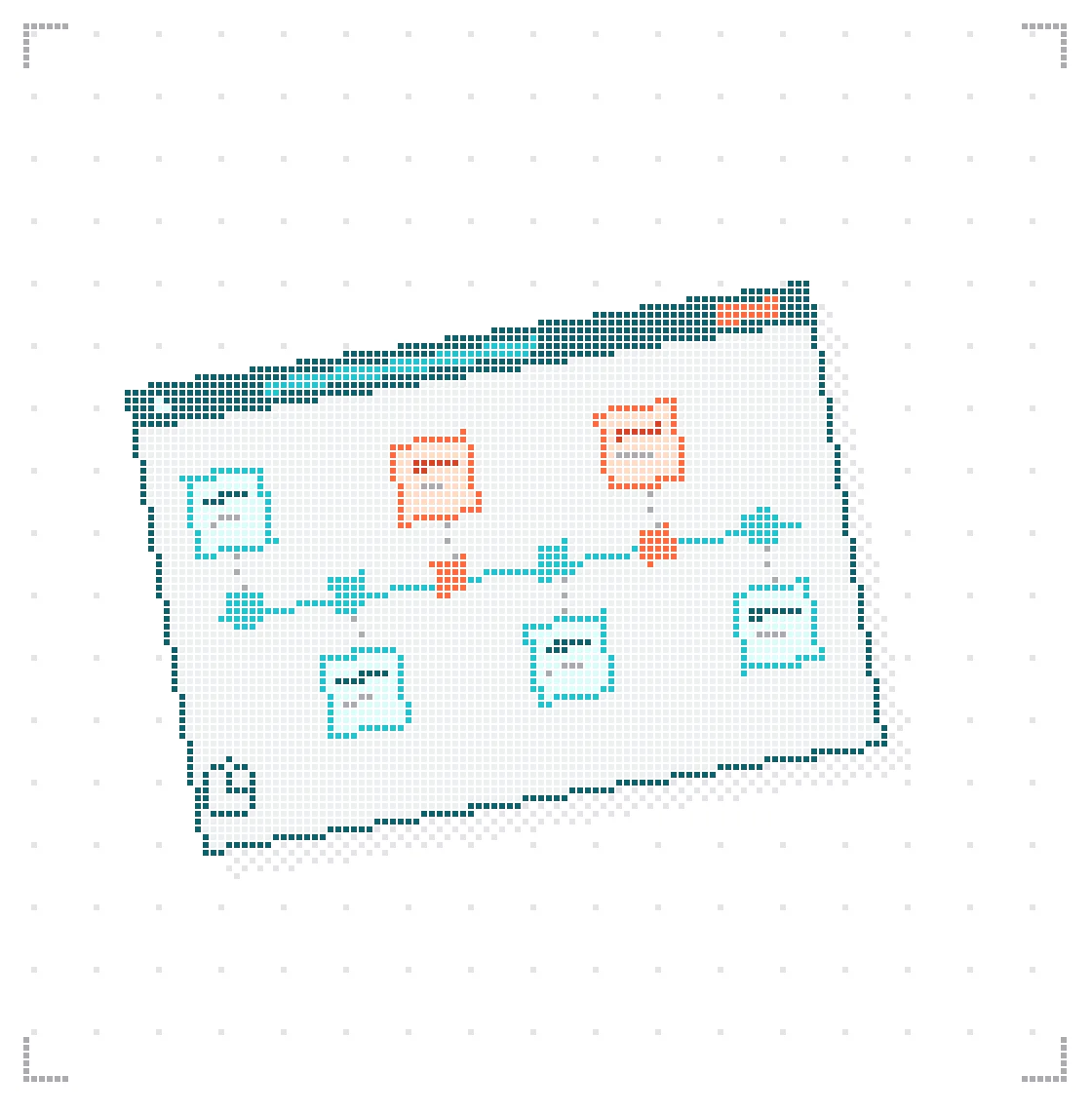
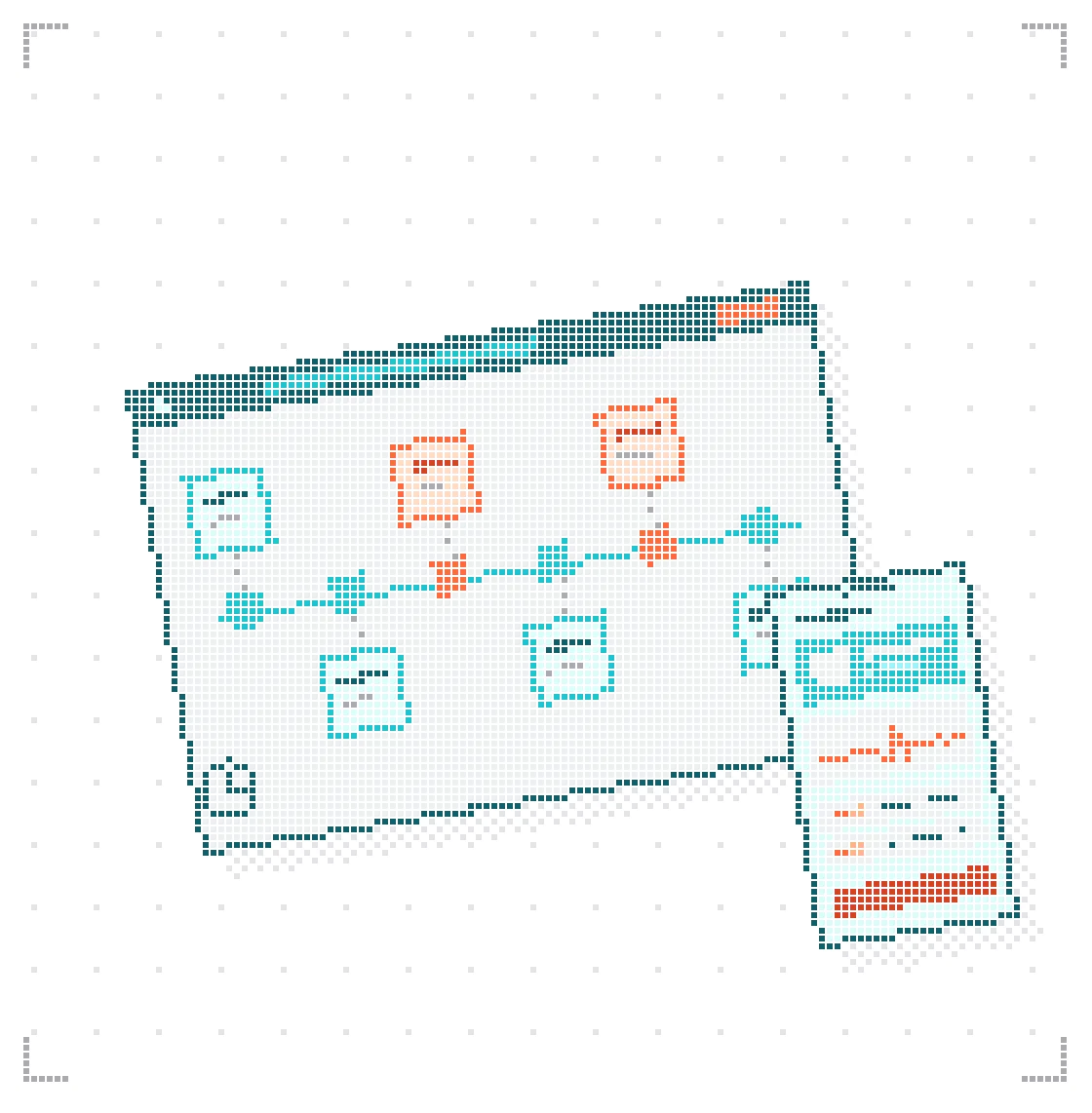
We start with one landing page in Framer: one clear audience, claims you can prove and a form with no health details.
Idea → Pilot · For health-tech founders before a pilot or a raise · Pre-seed · Seed · Spin-offs · A single landing page can go live in days
“Clinicians get the product. Procurement keeps asking for the same documents.”
We plan a path for each buyer: clinician pages, a security page IT can read, and evidence with sources.
Pilot → Growth · For health-tech scaleups selling to several buyers · Series A · Series B · Scaleups · 3–6 weeks to a full marketing site
“Our site still sells the product we had three years ago, and marketing can’t change a page without a developer.”
We rewrite the story, rebuild on a CMS your team runs and set up redirects so search traffic carries over.
Old site → New site · For established health companies with an outdated site · Providers · Health systems · Medtech · Scoped after a 30-minute call
A healthtech website has to speak to clinicians, buyers, patients and investors at once. Pick the parts you need. We agree the exact scope before work starts.
Build your scope
Your counsel makes the compliance calls. We design the site so those calls are easy to follow and hard to break by accident. The table maps the main rules onto a healthtech site.
| Part of the site | What applies | What we do |
|---|---|---|
| Public marketing pages | In June 2024 a federal court vacated the part of HHS guidance that treated an IP address plus a visit to a public health page as protected health information. Other parts of that guidance still apply. | Standard analytics on public pages, set up with your counsel’s sign-off. No tracking tied to health conditions. |
| Ads and tracking pixels | The FTC fined GoodRx $1.5M and ordered BetterHelp to pay $7.8M for sharing health data with advertising platforms. This applies even where HIPAA doesn’t. | Pixels stay off pages where visitors reveal health information. Conversion events carry no health details. |
| Demo, contact and waitlist forms | Health details typed into a form can become regulated data. | Marketing forms ask for name, role and company. Anything clinical goes to a separate HIPAA-eligible tool your team picks. |
| Logged-in portals and booking | HIPAA applies if you’re a covered entity or business associate. | Kept outside the marketing site and its analytics. We design the handoff between the two. |
| Payments | Payment tools tied to health services can carry health data too. Squarespace Payments, for example, offers no business associate agreement. | A payment provider your counsel approves, kept off marketing analytics. |
| Accessibility | WCAG 2.1 AA is the standard in the HHS Section 504 rule. In May 2026 HHS pushed the deadline back a year, to May 11, 2027 for organizations with 15 or more employees. | Contrast, type size, focus order, form labels and screen-reader names checked during design and again before launch, as in an accessibility audit. |
Sources: the Federal Register, the FTC BetterHelp order and a summary of AHA v. Becerra. This table summarises public facts and isn’t legal advice.
( One system. Every touchpoint )
Investors and hospital buyers notice when the website, the product and the pitch deck look like three companies. For Delphyr we put all three on one design system.
Your marketers then add pages from the same blocks, so new pages stay accessible and on brand without a design review each time.
Page blocks
Hero, proof, integration and evidence sections your team reuses in the CMS.
Accessible tokens
Colour, type and spacing that pass WCAG AA contrast and size checks.
Proof patterns
Footnoted claims, customer logos and study summaries with their sources.
Shared with product
The same type, colour and components as your app and your decks.
Doctors want a patient’s history to show up in seconds, and few ask which language model does it. Put that speed on the first screen.
In the Delphyr product, every AI answer points to the note, lab result or guideline it came from. Hold your website to the same rule. Readers trust a footnoted number over a big unsourced one.
“EU-hosted” or “no data leaves your EHR” answers a hospital buyer’s first question before they ask it.
In consumer health, a hidden price reads as a warning sign. If the patient pays, show the starting price before the form.
Healthcare buyers have seen a lot of hype. Quiet type and plain copy feel safer than gradients and exclamation marks. Delphyr’s site and product share the same restrained interface.
A 90-second walkthrough of one real scenario does more than a feature tour. Delphyr’s onboarding video follows one patient, one question and one answer.
( Why teams pick us )
A healthcare website design company for healthtech startups, scaleups and established health companies, across the US, Europe, the Middle East and Asia-Pacific.
Five stages with a clear outcome each. A healthtech marketing site takes 3–6 weeks, with progress every 24–48 hours.

We map your audiences, the claims you can prove and your compliance constraints.
You get
Positioning, sitemap and a page-by-page plan for which proof goes where.
You get

Homepage first, then the key pages. You see progress every 24–48 hours in Figma or on a live link.
You get

Framer, Webflow or Next.js, with accessibility checks, analytics set up to your counsel’s rules, and a CMS your team can run.
You get

Redirects if you’re replacing an old site, a CMS walkthrough, and the design files are yours.
You get
Agencies that mostly serve hospital systems often quote four to nine months for a redesign. Most healthtech startups can’t wait that long, so we scope projects to ship in weeks, on the platform that fits your team.
| Best when | Watch out for | |
|---|---|---|
| Framer | Marketing wants to ship pages fast, with rich motion. Delphyr’s site runs on Framer. | Not the place for patient data or logged-in features |
| Webflow | You need a large CMS with many resources, case studies or locations | Keep health data out of native forms |
| Next.js | The site shares components or login with your product | Every change needs a developer unless you add a headless CMS |
Any of the three can host a compliant marketing site. None should collect clinical information through built-in forms unless your counsel has approved the setup.
Most healthtech companies start with one of these. Many add product design or ongoing work later.
01 / Landing page
For a pilot or a raise
01 / Landing page
For founders who need one credible page before a pilot meeting, a conference or a fundraise.
02 / Website
Strategy, design and build

02 / Healthtech website
Strategy, design and buildFor healthtech companies selling to clinicians, hospital buyers, payers or patients, new or redesigned.
03 / Monthly plan
Pages, product and decks

03 / Ongoing design
For marketing and product teams that ship pages, campaigns and features every month.
Healthcare website quotes swing with page count, integrations and the number of audiences. We price in four ways.
After a free 30-minute call we send a fixed price in writing. It changes only if the scope does.
A small real piece of the project, such as a homepage hero concept.
One week on a real task with the whole team. You keep what we make.
Design, or Design + Development, billed monthly.
Current plans and amounts are on our pricing page.
( Hear it from our clients )

We worked with Mara for a year and a half, up to our successful acquisition. We’re very happy with the team — highly professional and instrumental in helping us overcome every challenge along the way.
Founder, ZofiQ (acquired by ConnectWise)
We brought Mara in as a design partner. They always ask the right questions, challenge decisions when needed, and help us build things that actually make sense, not just look good. Recommend.
Founder, Delphyr

Mara led a strategic redesign across our entire business — from branding to product and marketing. We’re very happy with the results and look forward to continuing our partnership.
Founder, Minisport.hk

It was nice to cooperate with Mara, very responsive and flexible team!
Content Director, Halborn
Your product could be the next story.
Tell us who buys your product and what they need to believe. We’ll come back with a scope, a timeline and a fixed price.
Or book through your AI assistant
Mara
Intro project call
Tell us what you sell, who buys it and any compliance constraints. We’ll suggest the scope for your website.
| Mon | Tue | Wed | Thu | Fri | Sat | Sun |
|---|---|---|---|---|---|---|
What founders and marketing leads ask before hiring a healthcare website design company.
It depends on page count, integrations and who you sell to. Quotes vary widely: bids for the same healthcare brief can range from under $10,000 to $85,000. Template-based clinic websites start at a few thousand dollars. Hospital-system redesigns run into six figures. For healthtech companies we send a fixed price after a 30-minute call. You can also start with a paid sample or a monthly plan.
Our healthtech marketing sites take 3–6 weeks. Bigger sites with many audiences, migrations or integrations take longer, and the proposal will say how much longer.
Strictly speaking, there’s no such thing as a “HIPAA-compliant website.” HIPAA covers how protected health information is handled, so it applies to the parts of a site that collect, store or send it: intake forms, booking, portals, chat. An About page or a blog post doesn’t. Ask your counsel where your line is. We design the site so health data stays out of marketing tools.
On public pages, often yes, with care and your counsel’s sign-off. Keep pixels off pages where visitors reveal health conditions, and never send health details in conversion events. The FTC’s GoodRx and BetterHelp cases show what happens when health data reaches ad platforms.
WCAG 2.1 AA. It’s the standard in the HHS Section 504 rule and the usual reference point in ADA website cases. We check against it during design and before launch.
For most healthtech marketing sites, Framer or Webflow. Pick Next.js when the site has to share login or components with your product. Small practices often run on WordPress, Wix or Squarespace. None of these make their standard contact forms safe for patient data. Squarespace, for example, signs a business associate agreement only for its Acuity Scheduling add-on. We treat built-in forms on any builder, Framer and Webflow included, as off-limits for health details and embed a HIPAA-eligible form tool where one is needed.
Start with who visits and what each person needs to believe. Then write the claims you can prove, plan one page per audience, design mobile-first, build on a platform your team can update, and check accessibility against WCAG 2.1 AA before launch. Keep patient data out of marketing forms and analytics from day one. Our process above shows how that fits into 3–6 weeks.
Yes, and it’s a common first project. A single landing page in Framer can go live in days. It should still follow the same rules: one clear audience, claims you can prove, and no health details in the form.
Rarely. We work with companies that sell healthcare software or services. A practice-focused agency usually fits a clinic better.
Yes. For Delphyr and Boom we designed the product, website, decks and brand on one system, so the product, site and decks read as one company.