The best fintech design agency depends on what you are building. UXDA is the specialist for banks and neobanks with enterprise budgets. Lazarev fits funded payments and lending products. Mara fits seed to Series A teams in crypto, DeFi, investing and B2B finance that need product and website from one team.
Disclosure. We are Mara, a fintech design agency, and we rank ourselves third. Most fintech agency lists in this search are written by agencies, and three of the five ranking today are more than 200 days old. We checked every price on October 27, 2026, gave every agency a limits section, and kept our own rating to what you can verify in public.
Building a non-fintech SaaS product? Our best SaaS design agencies list compares a different set of teams.
Quick comparison
What the table shows: the price gap tracks the buyer. Agencies built for banks carry bank-level minimums; agencies built for startups start below $10,000.
How did we rank these agencies?
We ranked agencies by how much public evidence they show for regulated fintech work, then by fit for a stage and product type.
- Public fintech work: product screens, not only marketing sites.
- Coverage of at least two fintech product types.
- Pricing we could check on the agency site or verified Clutch reviews. Where none exists, we write "on request."
- Activity in 2026.
- A clear answer to who they are best for.
The ratings below are our editorial read of public portfolios and service pages, not client scores.
What makes fintech design different from regular product design?
Fintech design is regular product design plus a set of screens a regulator, a bank partner or a nervous user will judge. Those screens decide whether people finish signing up. In our State of Fintech UX 2026 review of 50 financial products, the same four problems kept coming back.
The regulatory requirements are fixed. The design around them is not, and that is where agencies differ.
The 12 agencies, reviewed
Each review shows the agency's homepage as it looked on October 27, 2026.
1. UXDA — for banks and neobanks
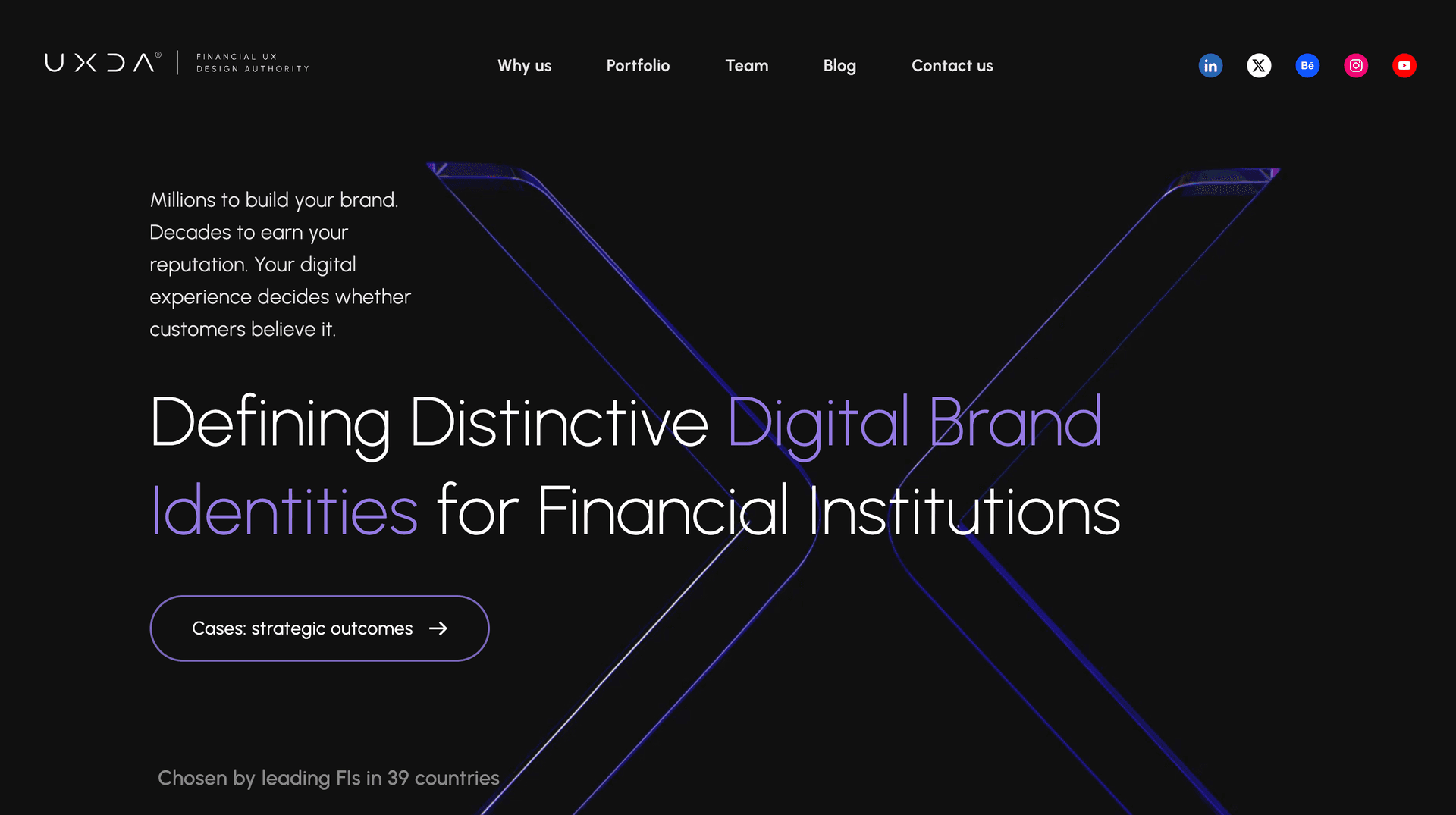
UXDA works only on financial products: digital banking, payments, trading, lending, wealth and insurance. Its Clutch profile lists design awards including Red Dot and iF.
- Ideal for: banks and well-funded neobanks redesigning a full banking app.
- Why this rank: the deepest single-industry focus on this list.
- Strengths: banking domain depth; experience across retail, corporate and investment banking.
- Things to consider: Clutch lists a $250,000+ minimum and $200–300 an hour. That rules out most startups.
- Editorial read: Regulated flows ★★★★★ · Data density ★★★★★ · Trust & brand ★★★★★ · Marketing web ★★★☆☆ · Build ★★☆☆☆
2. Lazarev — for funded payments and lending products
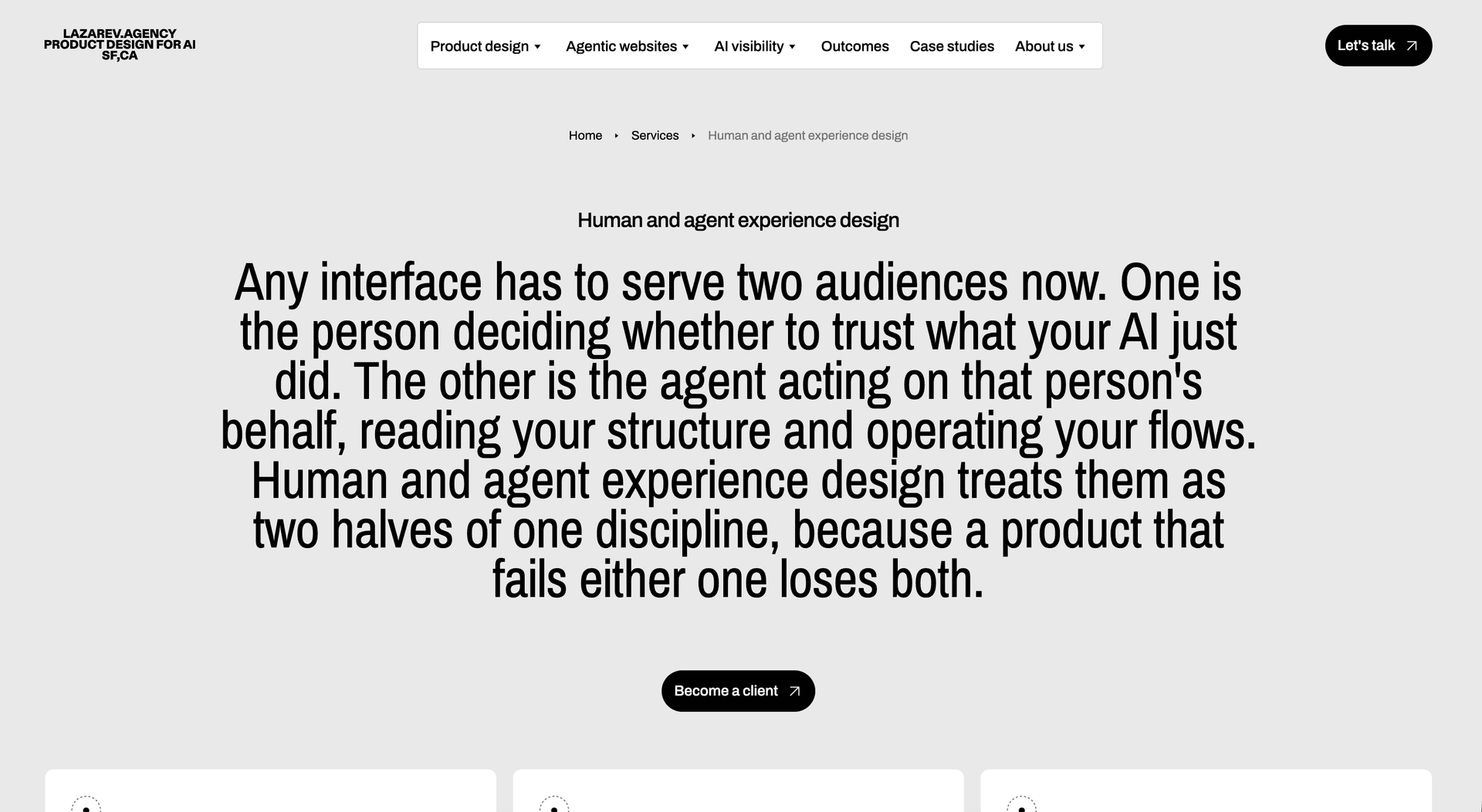
Lazarev has designed fintech products since 2017, with payments, lending, banking and AI-native finance on its fintech page. It covers research, brand, product and website.
- Ideal for: Series A+ fintech teams that want strategy, brand and product from one studio.
- Why this rank: broad fintech product coverage with a full-funnel offer.
- Strengths: UX strategy and motion; one reviewer said they charge accordingly for top-tier work.
- Things to consider: Clutch lists a $100,000+ minimum, though reviewed projects ran $15,000–60,000. Ask which applies to you.
- Editorial read: Regulated flows ★★★★☆ · Data density ★★★★☆ · Trust & brand ★★★★★ · Marketing web ★★★★★ · Build ★★★☆☆
3. Mara — best for seed to Series A crypto, DeFi, investing and B2B finance, insurance tech
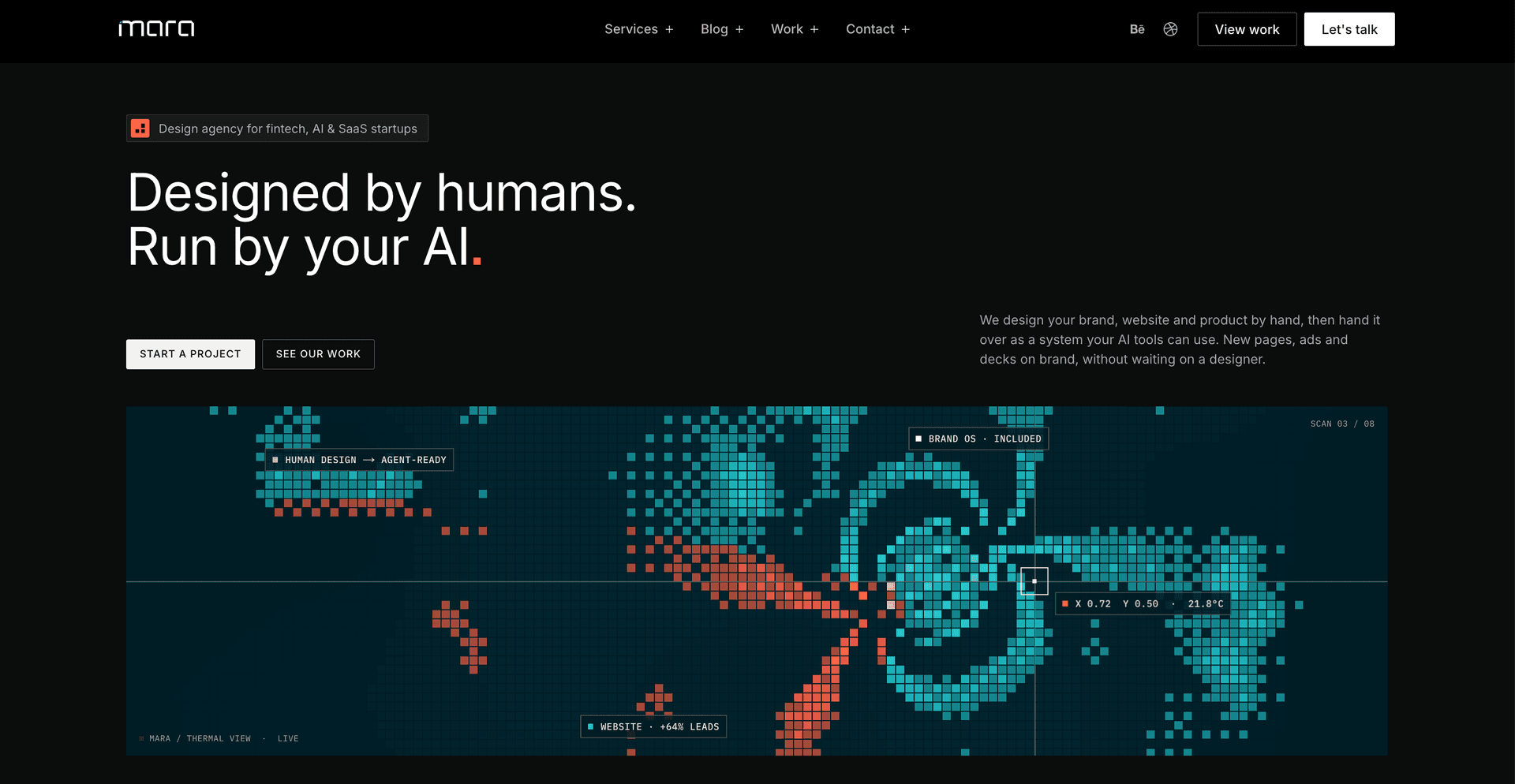
We build and run our own products, so we design fintech with distribution in mind: how a user arrives, what promise brought them, and which screen has to keep it. We map the business logic first — verification states, limits, failed payments, fee rules — because those are the screens that break in production.
- Ideal for: funded startups in crypto, DeFi, investing or B2B finance that need product, website and launch from one team.
- Why this rank: we publish our own fintech UX data (the 50-product review above), and design and development sit in one team.
- Strengths: speed, business-logic depth, and contact with users during the project rather than only at the research phase.
- Things to consider: we do not publish fintech case studies with metrics, so judge us by our research and a call. For a bank-wide redesign with procurement and audit trails, UXDA or Lazarev is the safer pick.
- Price: websites $3,000–15,000, products $3,000–25,000, retainers $3,000, $5,000 or $10,000 a month.
- Editorial read: we do not rate ourselves.
See our fintech design agency page for how we scope fintech work.
4. Clay — best for brand-led fintech at Series B+
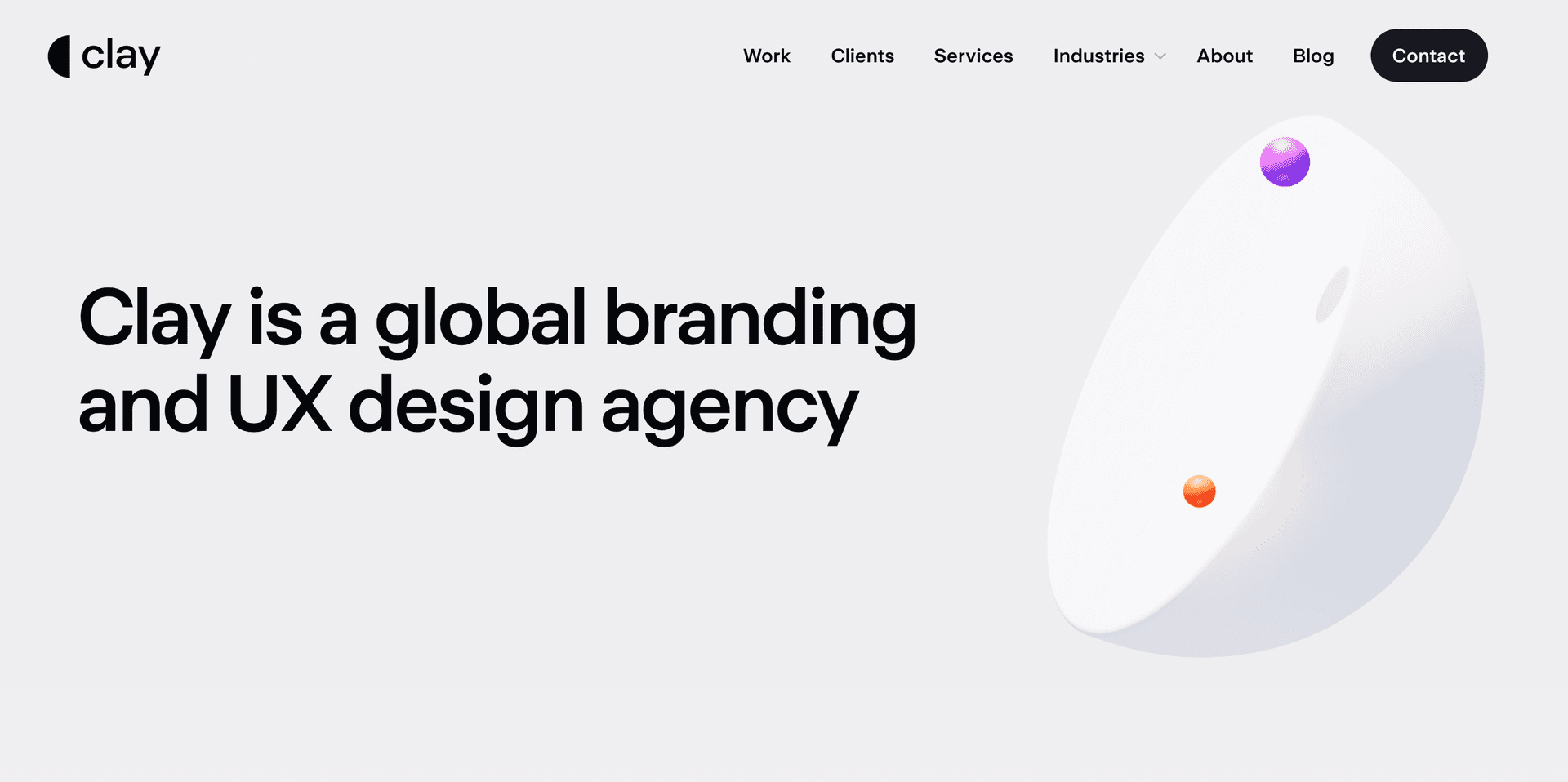
Clay is a San Francisco branding and UX studio whose clients include Coinbase, Stripe and Credit Karma.
- Ideal for: well-funded fintech brands where trust starts with the brand.
- Why this rank: strong financial-brand clients and full-stack design.
- Things to consider: projects run $10,000–150,000 on Clutch, and fintech is one industry among many.
- Editorial read: Regulated flows ★★★☆☆ · Data density ★★★★☆ · Trust & brand ★★★★★ · Marketing web ★★★★★ · Build ★★★★☆
5. Praxent — best for design plus engineering in one contract
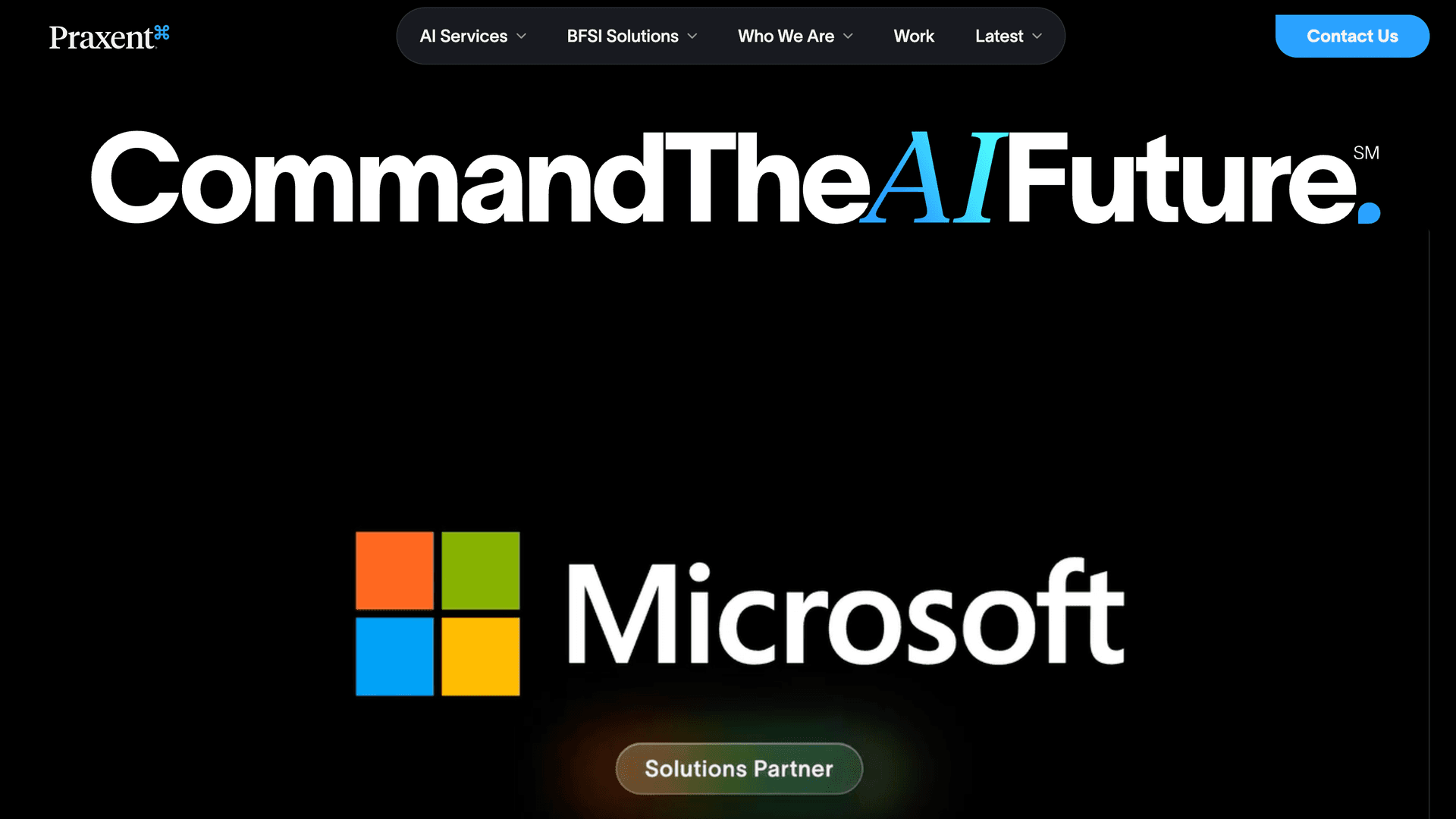
Praxent is a fintech consulting and engineering firm that also designs products, including clickable prototypes for early validation.
- Ideal for: lenders and insurers that need the build, not only the design.
- Things to consider: $25,000+ minimum and $50–99 an hour on Clutch. The homepage now leads with AI transformation, so confirm a design team is still on offer. One reviewer felt the team took on more than it could handle on a large project.
- Editorial read: Regulated flows ★★★★☆ · Data density ★★★★☆ · Trust & brand ★★★☆☆ · Marketing web ★★☆☆☆ · Build ★★★★★
6. StanVision — best for payments and B2B finance websites
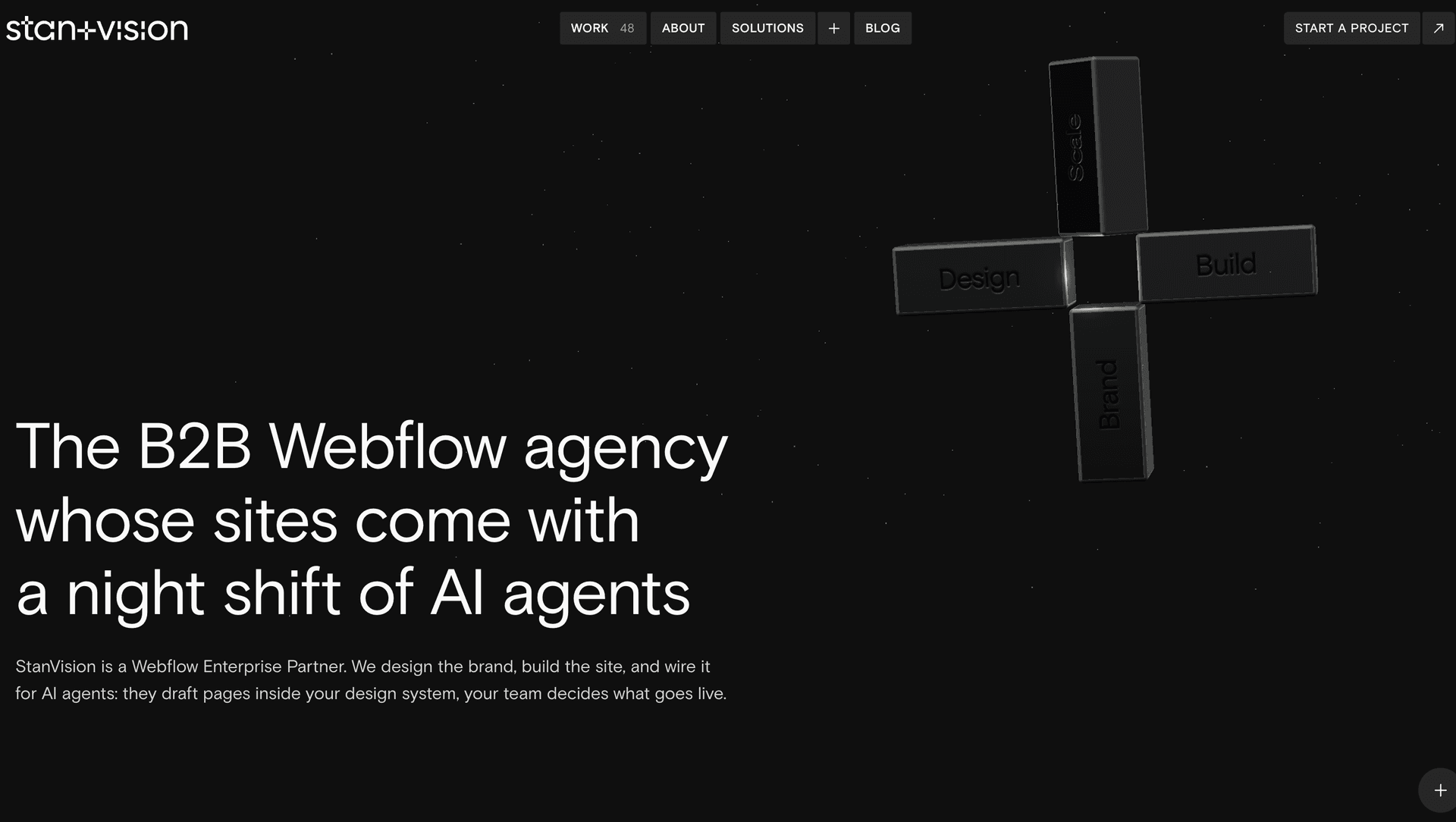
StanVision designs product UX, brand and Webflow sites for payments, crypto and B2B finance teams.
- Ideal for: fintech teams whose website has to earn trust before signup.
- Things to consider: $25,000+ minimum, $50–99 an hour. Most Clutch reviews cover websites and branding, so ask for in-app work.
- Editorial read: Regulated flows ★★★☆☆ · Data density ★★★☆☆ · Trust & brand ★★★★☆ · Marketing web ★★★★★ · Build ★★★★☆
7. Humbleteam — best for consumer fintech apps and brand
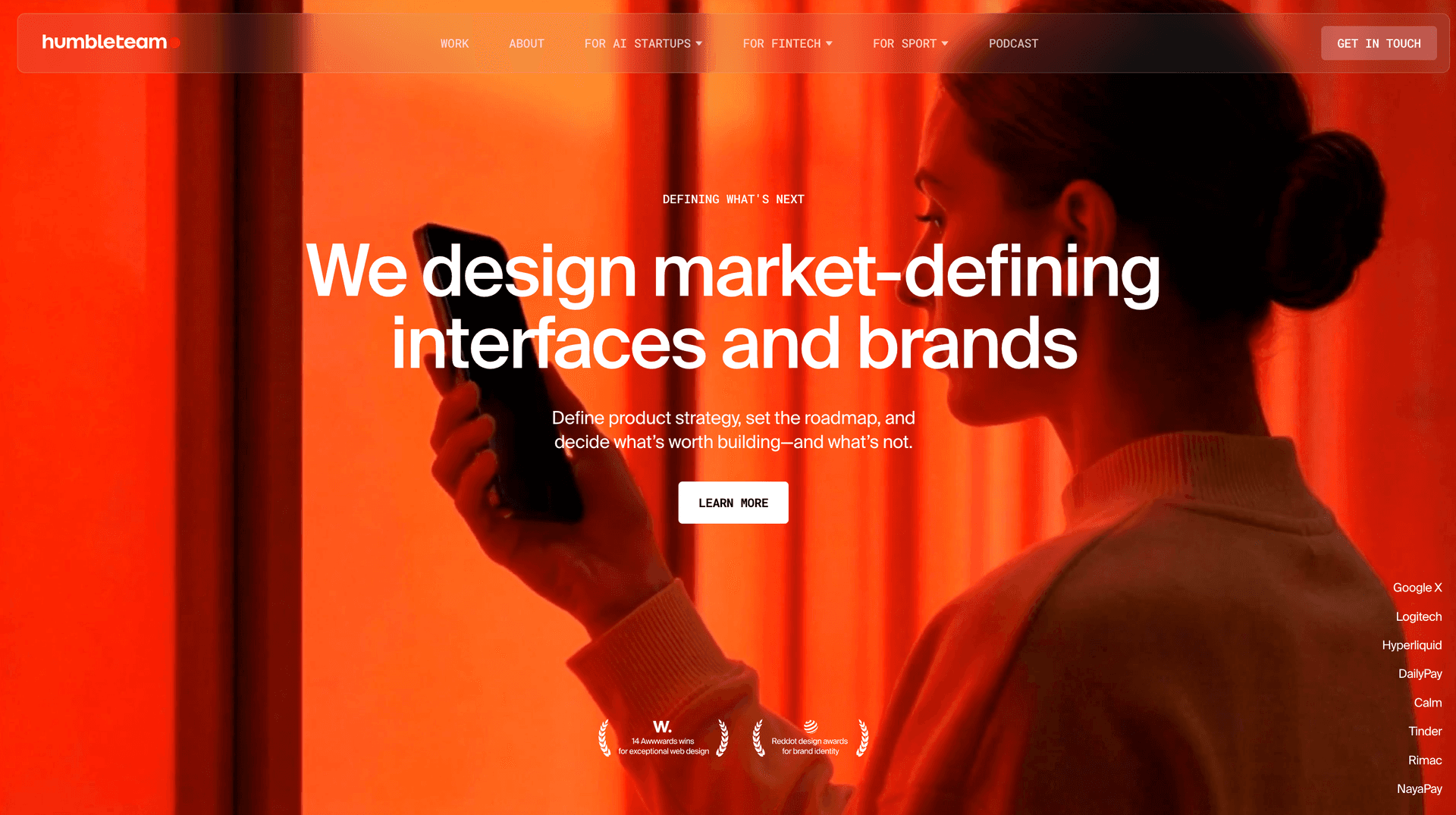
Humbleteam designs mobile apps and brands, with fintech, investment and crypto-payments projects on Clutch.
- Ideal for: consumer fintech apps where the brand carries trust.
- Things to consider: $5,000+ minimum and $50–99 an hour. Fewer B2B dashboards in public work.
- Editorial read: Regulated flows ★★★☆☆ · Data density ★★★☆☆ · Trust & brand ★★★★★ · Marketing web ★★★★☆ · Build ★★☆☆☆
8. Arounda — best for neobank and DeFi startups

Arounda reports 250+ projects across SaaS, fintech, Web3 and healthtech, and covers development.
- Ideal for: early neobank, DeFi and crypto teams on a startup budget.
- Things to consider: projects from $6,000; monthly designer prices only on a call. One Clutch reviewer suggested adding a product manager to cover analysis gaps.
- Editorial read: Regulated flows ★★★☆☆ · Data density ★★★☆☆ · Trust & brand ★★★★☆ · Marketing web ★★★★☆ · Build ★★★★☆
9. Merge — best for fintech inside vertical SaaS
Merge is a 30+ person studio in Tallinn designing SaaS, fintech, wealth and crypto products, with Webflow and React builds.
- Ideal for: B2B products where finance is one part of a wider SaaS.
- Things to consider: prices are not public; DesignRush lists a $10,000–25,000 minimum. Some reviewers asked for more accurate time estimates.
- Editorial read: Regulated flows ★★★☆☆ · Data density ★★★★☆ · Trust & brand ★★★☆☆ · Marketing web ★★★★☆ · Build ★★★★☆
10. Eleken — best for an embedded designer by the month
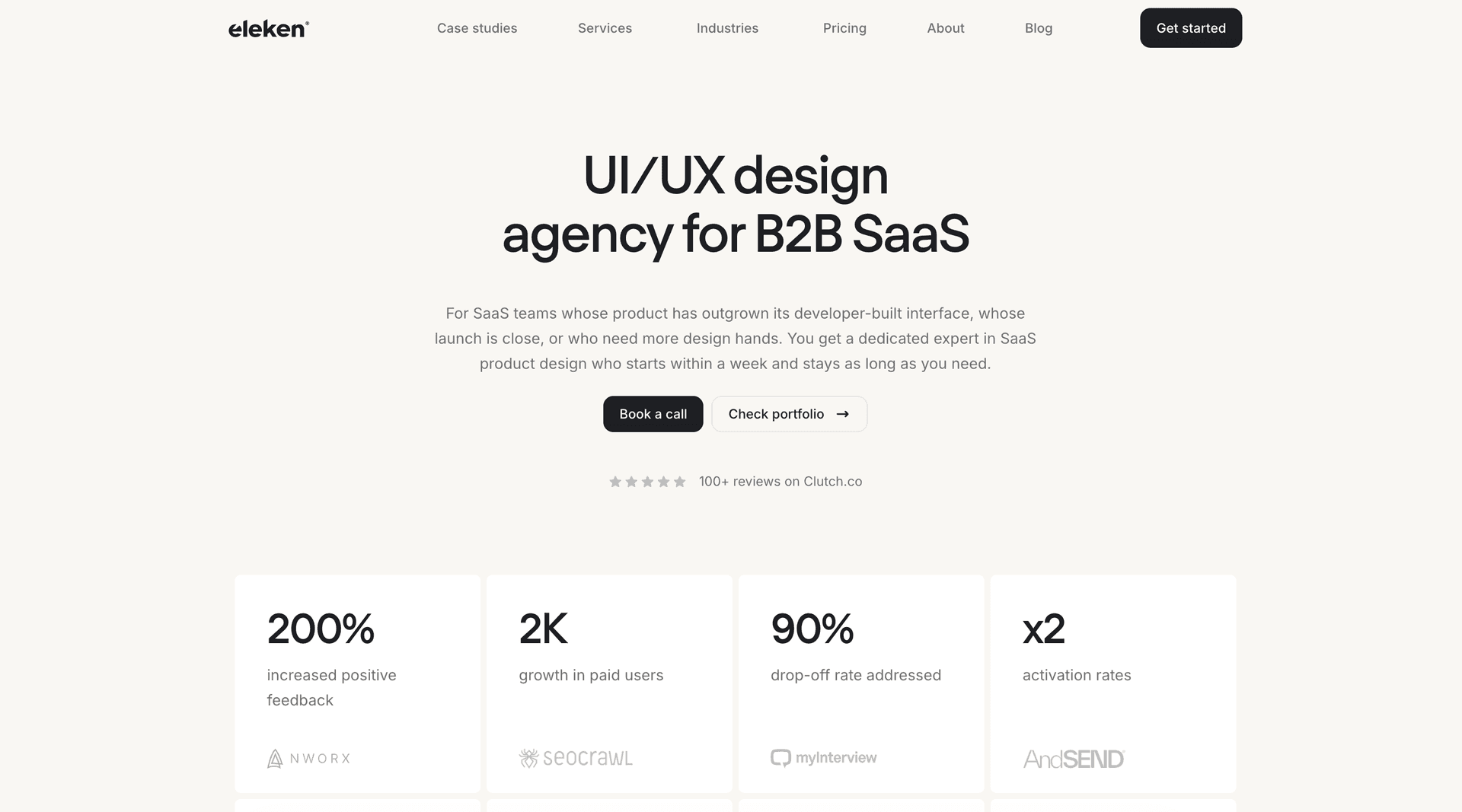
Eleken sells dedicated SaaS designers by the month, with a fintech industry page.
- Ideal for: fintech teams that already have a product and need steady design capacity.
- Things to consider: $4,599–11,999 a month with a 2-month minimum; not built for one-off landing pages.
- Editorial read: Regulated flows ★★★☆☆ · Data density ★★★★☆ · Trust & brand ★★★☆☆ · Marketing web ★★☆☆☆ · Build ★☆☆☆☆
11. UX studio — best for research-heavy B2B fintech
UX studio is a research-led product design team with fintech dashboards and insurance work in its portfolio.
- Ideal for: B2B fintech platforms that need user research before redesign.
- Things to consider: $10,000+ minimum and $50–99 an hour; some reviewers mention a slow project setup.
- Editorial read: Regulated flows ★★★☆☆ · Data density ★★★★☆ · Trust & brand ★★★☆☆ · Marketing web ★★☆☆☆ · Build ★★★☆☆
12. Phenomenon — best for banking and payments product UX
Phenomenon designs product UX for banking, budgeting, asset management and payments, with development in-house.
- Ideal for: regulated startups that need design and engineering together.
- Things to consider: Clutch lists a $10,000+ minimum and $50–99 an hour. Some reviewers suggest more attention to detail and consistency.
- Editorial read: Regulated flows ★★★★☆ · Data density ★★★★☆ · Trust & brand ★★★☆☆ · Marketing web ★★★★☆ · Build ★★★★☆
How do you check an agency's fintech experience?
Ask for screens, not logos. Seven questions that separate fintech specialists from generalists:
- Show us a document-upload screen you designed. Where did you put the security cues?
- What does your verification-pending state look like, and what does it tell the user?
- How do you show a fee before the user confirms a transaction?
- Show an error state for a failed payment. What is the next step it offers?
- Which regulators or bank partners reviewed your past work, and what did they push back on?
- How do you design a mobile KYC flow differently from the web one?
- What will the first 12 months cost us, including minimums?
An agency that answers the first four with real screens has done regulated work. One that answers with a case-study PDF has probably not.
How much does fintech design cost in 2027?
Fintech design costs more than general SaaS design at the top of the market, because bank-grade agencies carry bank-grade minimums. At the startup end, prices are close to SaaS.
What the table shows: match the agency's minimum to your round. A seed-stage team that hires a $250,000-minimum agency spends most of its runway on one project.
Next step
If you are building in crypto, DeFi, investing or B2B finance at seed or Series A, book a 30-minute call. We will tell you on the call if another agency on this list fits you better.

 Latest articleHow to Choose a Design Agency in 2027: A Practical Checklist
 Case studyiGaming Branding & Web Design: Crypto Casino