Web3/crypto • 13.06.2025
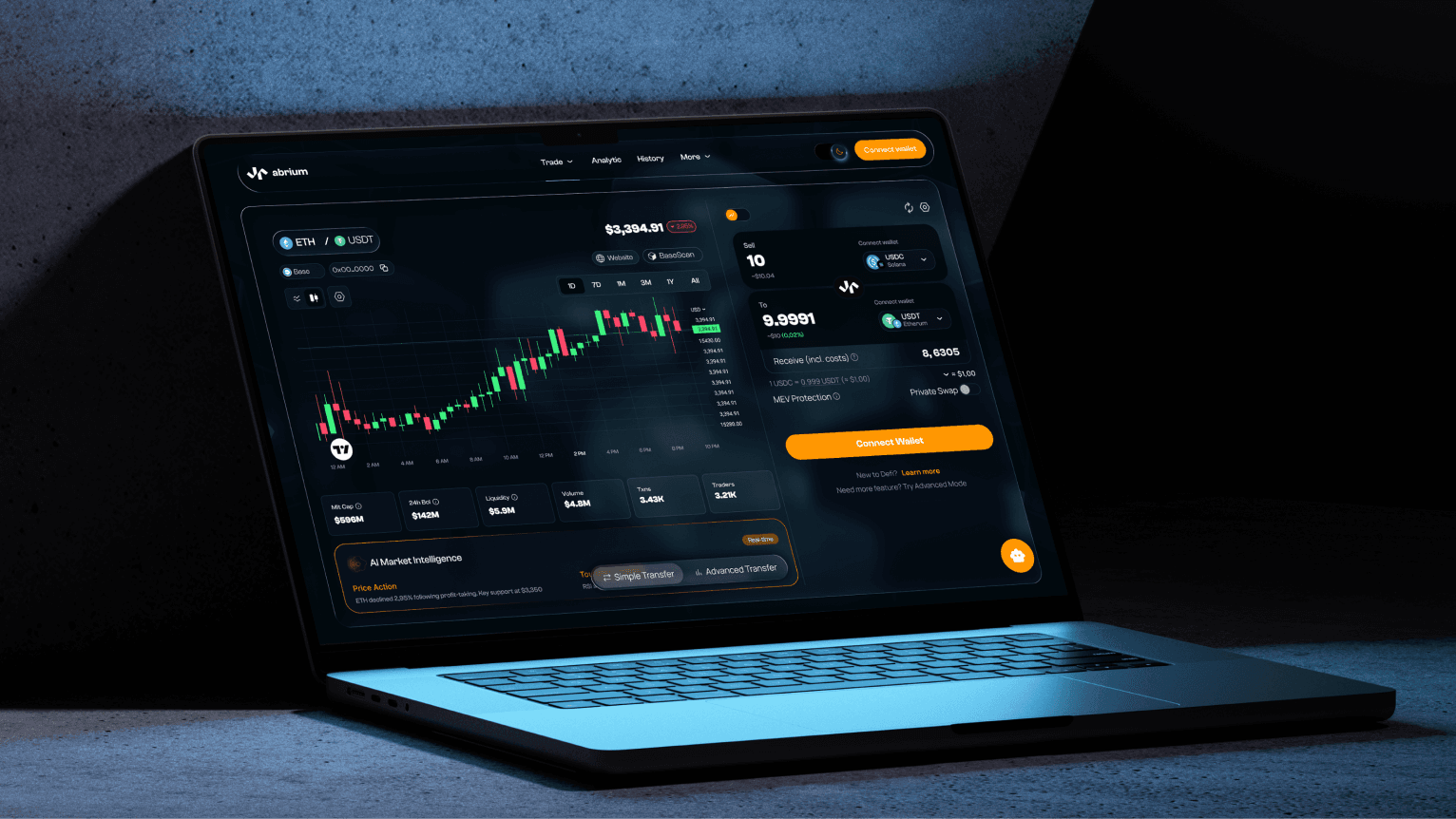
Decentralized exchanges have a UX problem that costs users real money. Cross-chain swaps mean juggling bridges, networks, and wallets across multiple tabs. Sniper bots watch the mempool and front-run trades, while sandwich attacks quietly drain value from every large swap. And most interfaces bury the numbers that matter — slippage, fees, route — behind jargon.
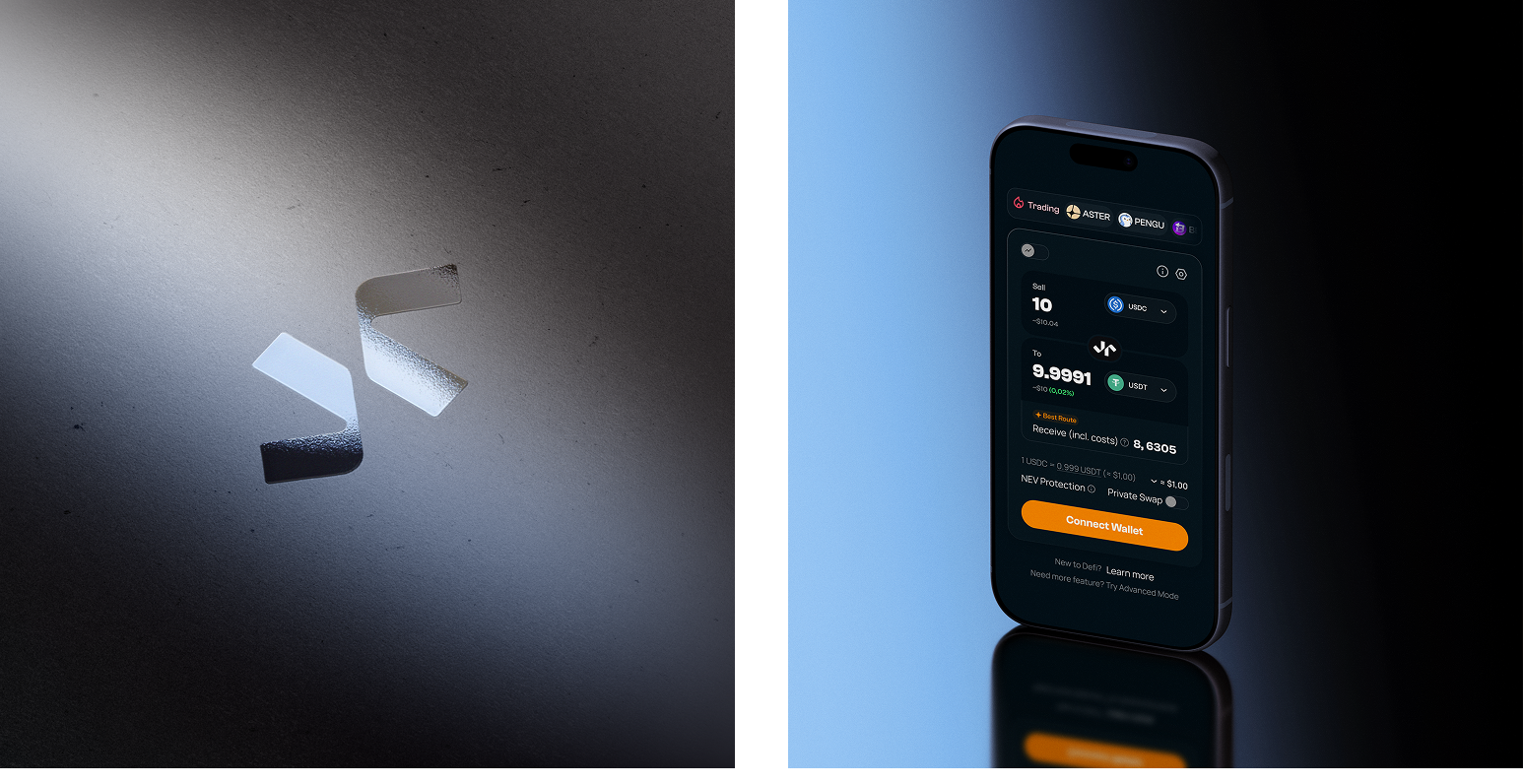
Abrium was building the answer at the protocol level: a cross-chain swap engine with MEV protection baked in. What they needed from us was the other half of the equation — a brand and a product experience that would make that technical edge obvious, usable, and trusted from the first swap.
Most DEXs treat protection as a settings toggle or a line in the docs. Almost none turn it into the centerpiece of the experience. That gap was Abrium's opening: if users could see their trade being shielded from front-running bots — in plain language, in real time — safety would stop being a claim and become the product's signature.
Our bet: the DEX that wins the next wave of DeFi users won't be the one with the most pairs. It'll be the one that a newcomer can trust with their first swap.
Mara delivered the full front face of Abrium
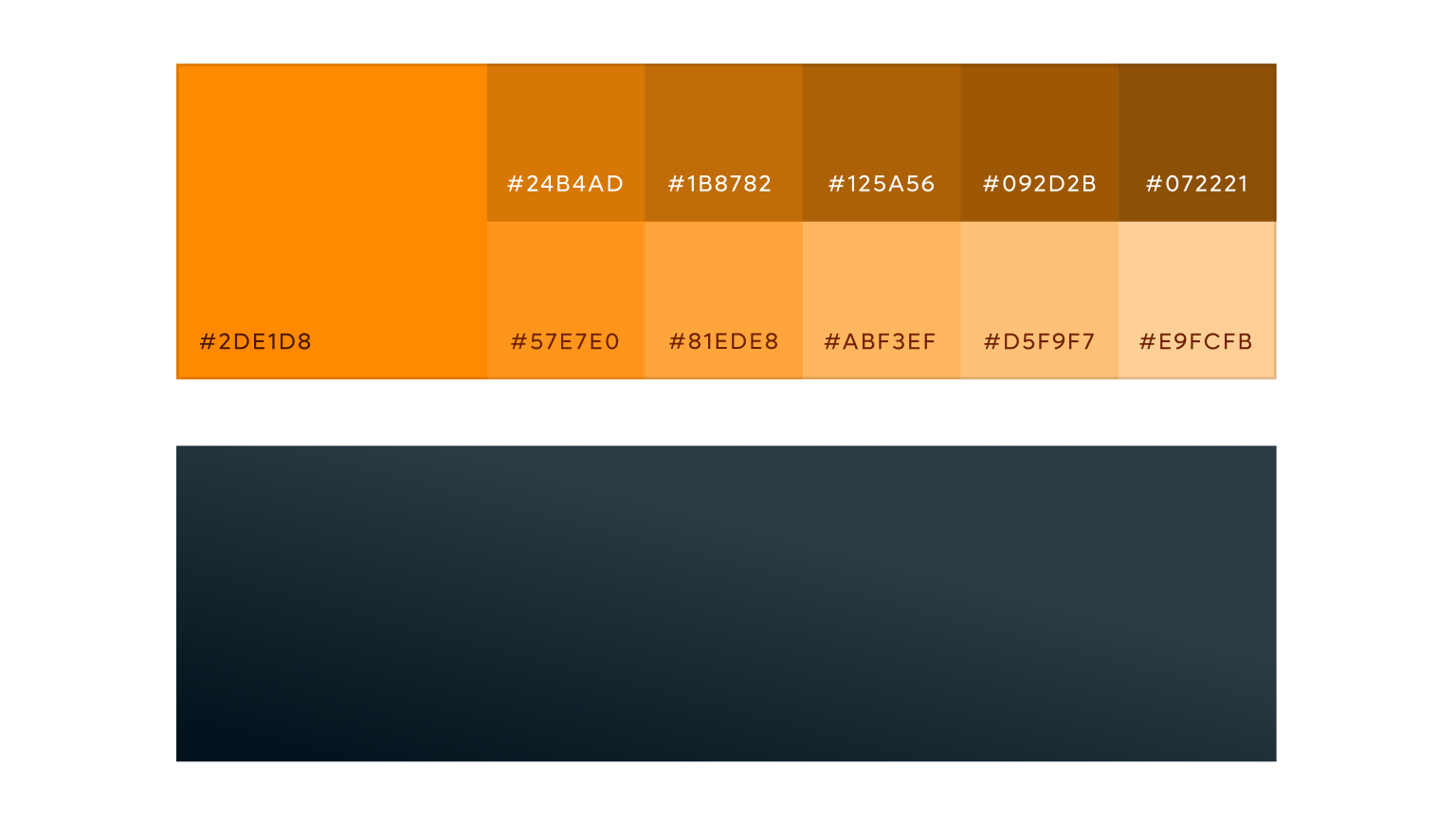
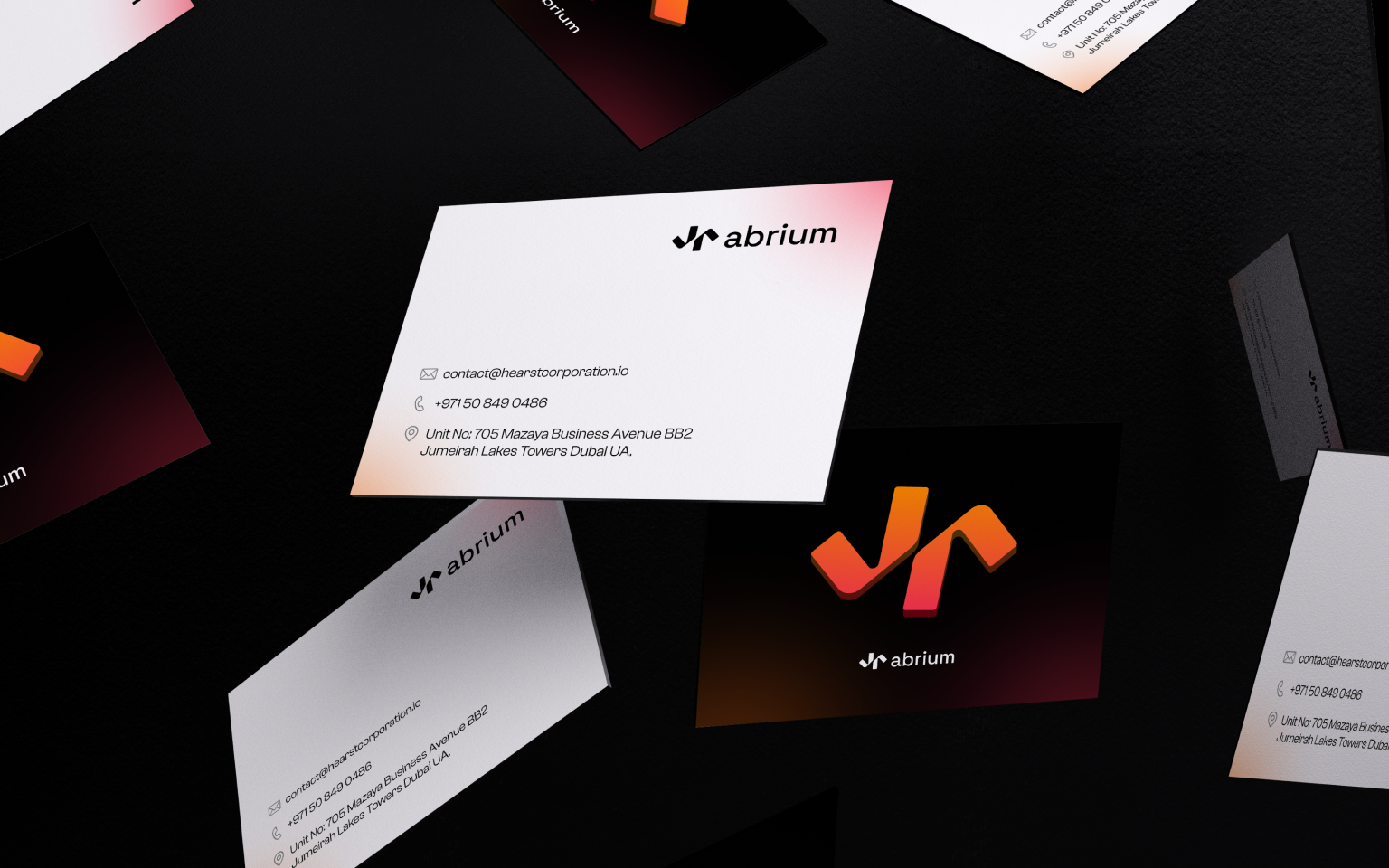
Brand Identity a visual language designed in Illustrator and Figma that signals precision and protection: confident, technical, and free of the neon-degen clichés that make cautious users hesitate.
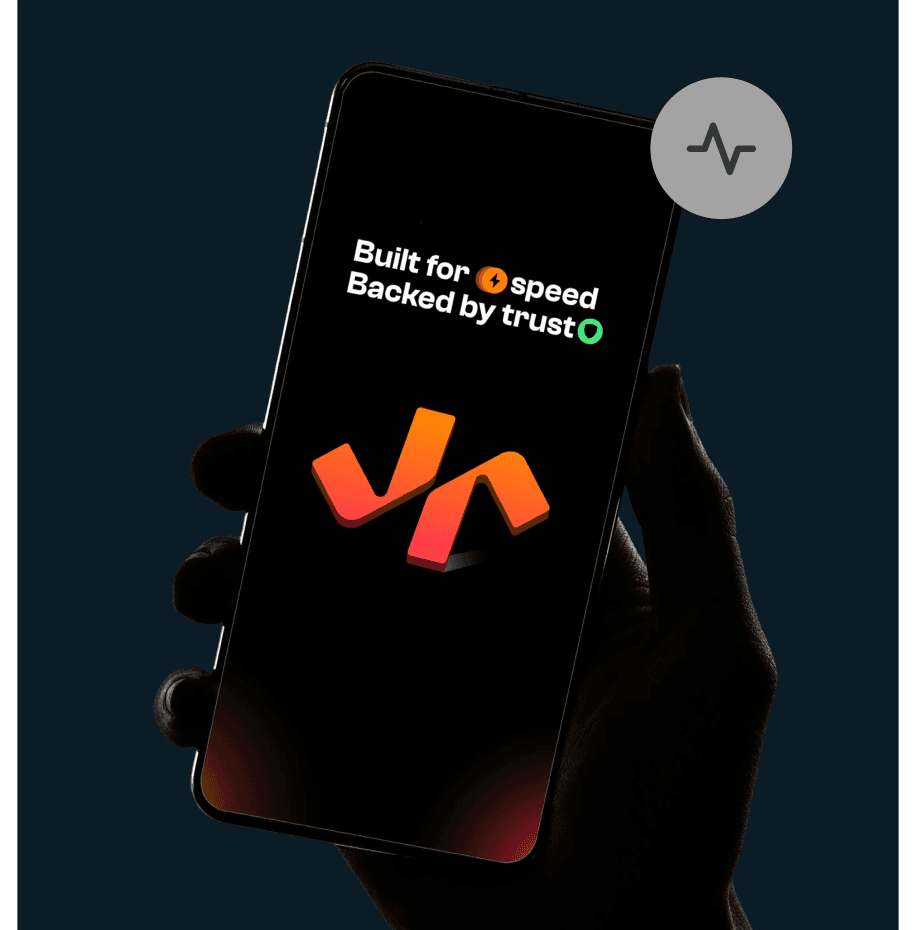
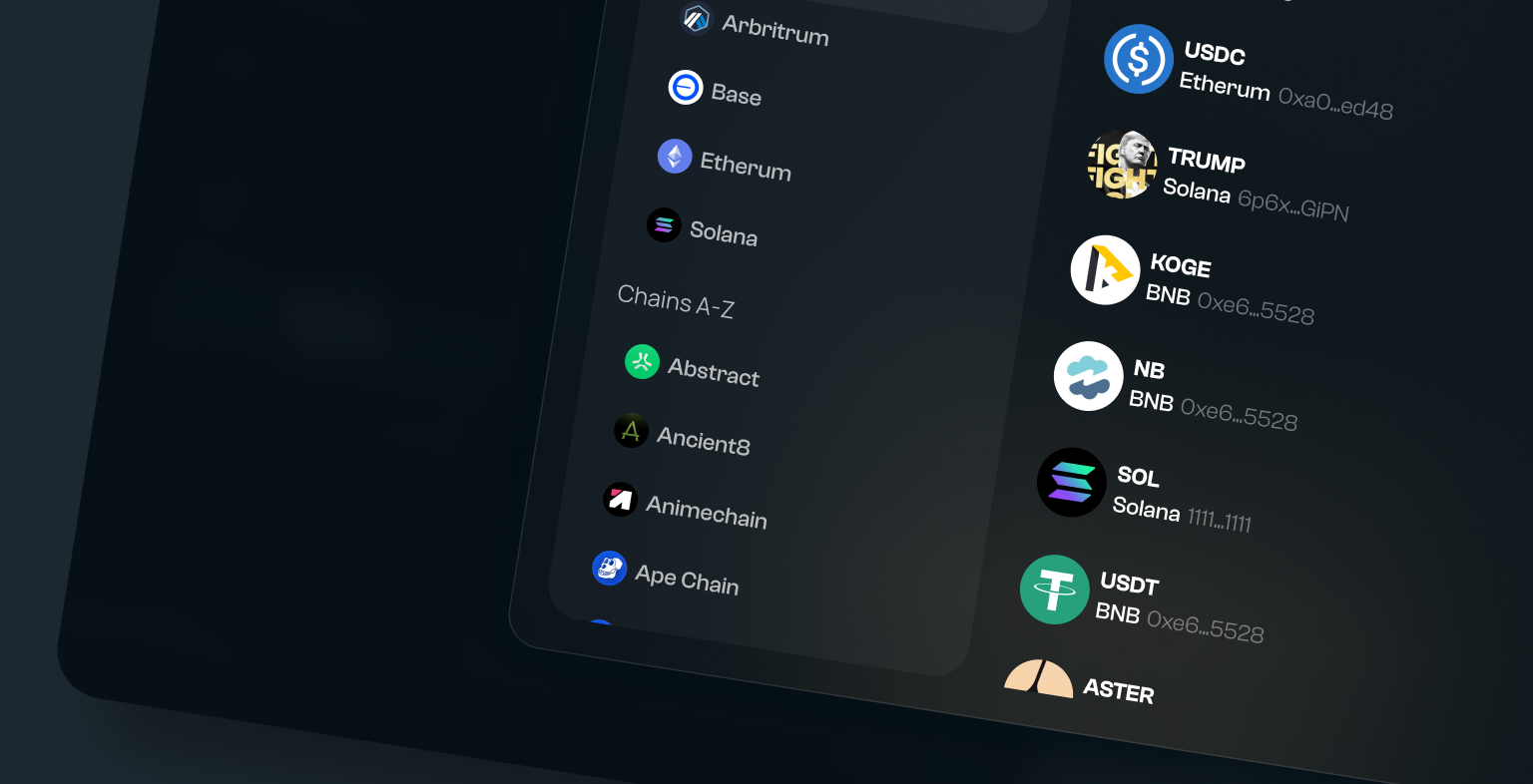
One screen, any chain. Users pick tokens, see the best route, and swap — bridging happens under the hood, not in their browser tabs.
Every trade runs through MEV protection by default. The interface shows the shield working: no front-running, no sandwich attacks, no fine print.
Slippage, fees, and routing are shown upfront in plain language — so users approve trades they actually understand.
We studied the leading swap platforms and aggregators, ran real trades through them, and documented every point where the experience leaks trust: hidden price impact, confusing network switches, failed transactions with no explanation, and value silently lost to MEV bots.
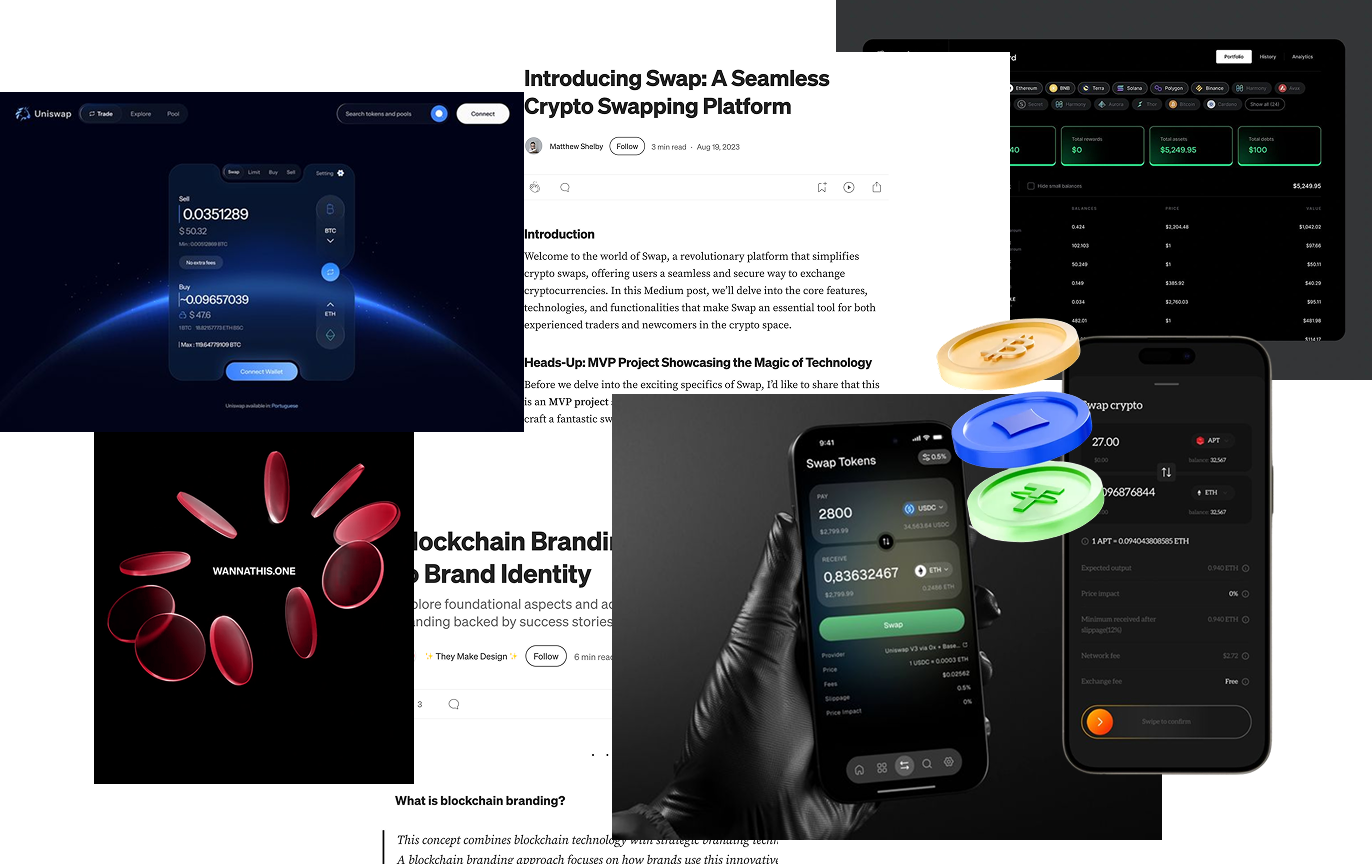
Competitive teardown — mapping the swap flows of major DEXs to find the patterns users already know and the failures nobody had fixed.
User mental models — understanding how traders of different experience levels think about risk, and what "safe" needs to look like for each.
Protocol deep-dive — working with Abrium's engineers to understand exactly how their MEV protection works, so the interface could explain it honestly.
We explored visual and interaction directions ranging from minimal-institutional to expressive, testing each against one question: does this make a first-time user comfortable signing a transaction? The winning direction pairs a calm, precise interface with one bold signature element — the visible protection layer wrapped around every swap.
.png)
MEV defense happens in milliseconds, deep in the transaction pipeline. We gave it a face: a clear protection state on every swap, with a plain-language note on what was blocked — turning a backend guarantee into a moment of reassurance.
We rewrote the interface in human language — "price may move up to X%" instead of raw slippage tolerance — while keeping exact figures and advanced controls one tap deeper. Beginners read sentences; professionals read numbers. Both get the truth.
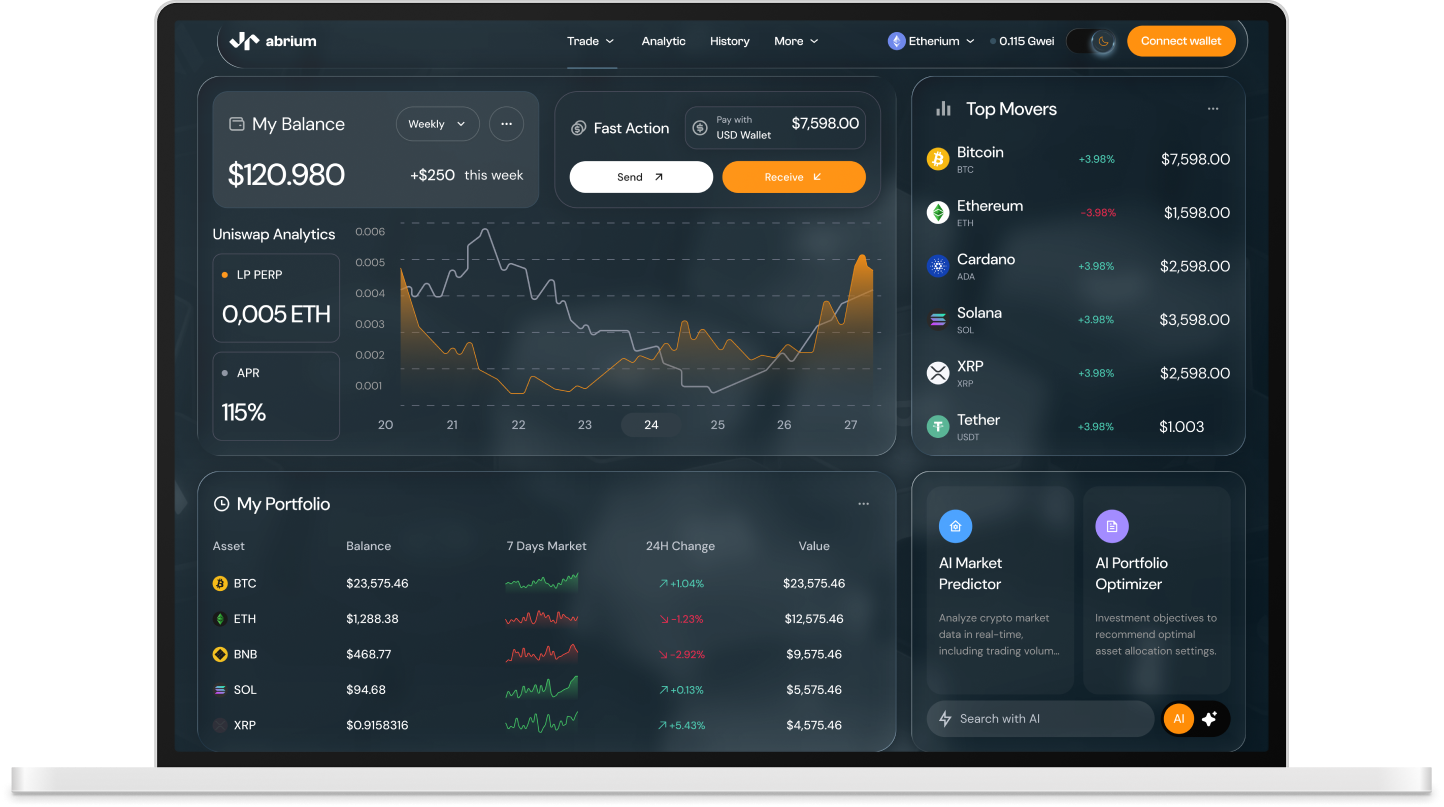
Users don't lose funds only to exploits — they lose them to interfaces they didn't understand. Abrium flips that: the default flow is the protected flow, every cost is visible before signing, and cross-chain mechanics never surface as user problems. With the new brand and product, Abrium gained:
A recognizable identity A visual system that stands apart from the degen aesthetic and reads as infrastructure, not a meme.
A converting front door A website that translates protocol-level engineering into reasons to connect a wallet.
A flagship-grade dApp A React-based swap experience, backed by Rust, designed to set the UX benchmark in its category.
The interface: cross-chain trading without the chaos.
Token selection, routing, bridging, and confirmation — unified into one continuous flow that behaves the same on every chain.
The shield: sniper bots, neutralized.
Front-running and sandwich attacks are intercepted at the protocol level — and the interface makes sure users know it on every single trade.
Security needs a UI. The strongest protocol-level protection is worthless to growth if users can't perceive it. Designing the feeling of safety is a product discipline of its own.
Simplicity is engineering. Every option we removed from the default swap screen required deep work with Abrium's team to handle that complexity in the protocol instead. Great DeFi UX is built in Rust as much as in Figma.